
English
Welcome to English Department. As a head of the English Department, I am really honored to supervise an active group of Academic Professors, instructors, researchers, and Excellent group of students who faithfully aim at achieving success on the levels of English language and literature.
English Department is established in 1985. It is one of important Departments in the College of Languages in Salahaddin University-Erbil. Students who graduate from this department have outstanding abilities to be teaches, translators and can work in other academic fields as well. They can be best representatives of the academic field serving different sectors in Kurdistan Region and in Iraq.
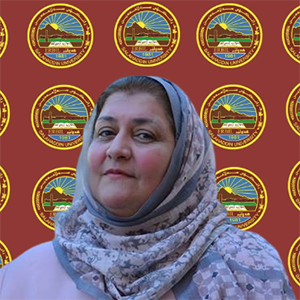
Name: Professor Dr. Juan Abdullah Ibrahim Al-Banna
Title: Head of English Department
Contact Information:
Email: [email protected]
Phone: +964 7504753677
My name is Juan Abdulla Ibrahim Al-banna. I am a Professor of English literature, 20th century Modern Novel, at Salahaddin University. My PhD is about Twentieth Century British, and American Autobiographical Novel: A study of Virginia Woolf's to The Lighthouse and Sylvia Plath's The Bell Jar. I attended several conferences in Turkey, Malatya, and with Cincinnati university when in Erbil presenting researches about women. I have written many researches related specifically to the gender of Modernism and women studies. Actually I have taught novel at all levels, 2nd stage, 3rd stage and 4th stage. I have taught also poetry, composition, literary criticism. I have taught MA students The rise of English Novel, Contemporary Novel. I have also taught PhD students, gender of Modernism and contemporary Modern Novel, I have taught High Diploma Students, a course in Gender studies. Due to my work in the department along many years as a member in scientific committee and my experience as a member in a higher studies exam committee, I managed to participate in these scientific activities. At the present, I am a Professor in Salahaddin University, College of languages, English department in Erbil which lies in North of Iraq.
The mission of the English Department is to provide students with a strong education in the English language, literature, and culture. We offer a wide range of subjects, including listening, speaking, reading, writing, vocabulary, composition, phonetics, phonology, syntax, morphology, sociolinguistics, and translation between English and Kurdish. Students also study the history of the English language and explore literature such as novels, plays, poetry, and criticism. Our goal is to help students improve their language skills, develop critical thinking, and become confident learners ready for academic and professional success.
VisionOur vision is to be a leading department in English studies, known for strong teaching, useful research, and serving the community. We aim to develop students who can communicate clearly, translate effectively, and understand literature, language, and culture. By combining language learning with knowledge of culture and history, we hope to inspire future teachers, translators, researchers, and others who will contribute positively to society.
Graduates of the English Department are expected to demonstrate the following competencies and qualities:
- Language Proficiency
- Literary and Cultural Knowledge
- Critical and Analytical Thinking
- Research and Academic Writing
- Linguistic Awareness
- Communication and Presentation Skills
- Cultural and Ethical Awareness
- Professional and Lifelong Learning
Students will achieve advanced proficiency in English, using the language accurately and effectively for academic, professional, and social purposes in both spoken and written forms.
Students will demonstrate knowledge of major periods, authors, genres, and movements in English literature, and understand how literary texts reflect and shape cultural, historical, and philosophical contexts.
Students will apply critical and analytical skills to interpret and evaluate literary and linguistic texts, employing appropriate theoretical frameworks and methodologies.
Students will conduct independent research using scholarly resources and digital tools, producing well-structured academic papers that adhere to recognized standards of citation and academic integrity.
Students will understand the structure, function, and diversity of the English language and apply linguistic knowledge to issues in communication, translation, and language teaching.
Students will express ideas clearly and persuasively in oral, written, and digital formats, and demonstrate effective participation in discussions, debates, and collaborative projects.
Students will exhibit sensitivity to cultural diversity and ethical issues, demonstrating awareness of global perspectives and intercultural communication.
Students will apply their knowledge of English language and literature in professional fields such as education, translation, media, and communication, and will demonstrate independence, teamwork, and a commitment to continuous learning.
The English Department at the College of Languages offers a comprehensive undergraduate program in English Language and Literature. Its core aim is to equip students with advanced proficiency in English, deep linguistic understanding, and strong analytical abilities suited for careers in education, translation, communication, and research.
🎯 Mission & GoalsThe program is designed to achieve the following educational outcomes:
- Develop strong command over the four core language skills - listening, speaking, reading, and writing.
- Cultivate critical thinking and analytical skills through the study of English literature and language structures.
- Provide knowledge of English culture and history, helping students engage with a variety of texts and contexts.
- Prepare graduates to function effectively in local, national, and international work environments where English proficiency is essential - such as education, media, translation, and international communication.
The typical English undergraduate program spans 4 academic years (8 semesters) and includes a balanced mix of linguistic, literary, and applied language courses.
🗂 Core Components 🗣 Language Skills & LinguisticsStudents build foundational competency in:
- English grammar and syntax
- Phonetics & pronunciation
- Vocabulary development
- Listening and speaking
- Academic writing and reading comprehension These courses aim to enhance communicative competence and practical usage of English in real-world contexts.
- English and American literature from classical to contemporary eras
- Literary analysis and criticism
- Cultural and historical contexts of major works.This component strengthens students’ analytical skills and cultural literacy.
Students also engage in courses that support practical language use:
- Translation (English ↔ Arabic)
- Public speaking and communication
- Critical reading and writing
- Research methods in language and literature These are designed to prepare students for professional roles where English proficiency is central.
The program is predominantly taught in English, fostering immersion and enabling students to develop authentic language skills.
Graduates of the English Language and Literature program will be able to:
- Communicate effectively in English - demonstrate professional command of oral and written English skills for a variety of contexts, including academic, social, and professional settings.
- Produce high-quality academic writing - construct coherent, well-organized essays and research-oriented texts.
- Understand and interpret literature - analyze major works from different periods of English literature, identifying stylistic and thematic elements.
- Think critically and analytically - apply critical thinking strategies when interpreting literary texts and language data.
- Understand linguistic concepts - explain how English works as a language, encompassing structure, usage, and key linguistic theories.
- Use literary and linguistic terminology accurately - analyze and describe language and texts using accepted academic terms.
- Conduct independent research - plan, carry out, and present original research in areas related to English language or literature, supporting findings with scholarly evidence.
- Apply theoretical knowledge - use concepts from linguistics and literary theory to understand and interpret texts and language phenomena.
(This reflects the kinds of courses usually in the English undergraduate curriculum at Salahaddin University’s program)
🧰 1. Foundation & Core Language SkillsThese core language courses generally appear across all years:
- General English / English I & II – foundational language skills (listening, reading, speaking, writing)
- Grammar & Morphology – advanced studies of English structure
- Phonetics & Phonology – sound systems & pronunciation training
- Conversation / Oral Communication – speaking skills and fluency practice
English Dept programs always include literature courses like:
- Introduction to Literature – basic literary genres and analysis
- English Literature (Across Periods) – e.g., early to modern literary movements (poetry, drama, fiction)
- Creative Writing (elective) – writing poetry, prose, creative texts (noted as a newer elective at Salahaddin University)
Applied English courses support real-world use:
- Composition & Academic Writing – writing essays, reports
- Reading Comprehension – textual interpretation skills
- Translation Studies – English-Arabic/Arabic-English translation (commonly offered in final years, similar to regional curricula)
- Teaching Methodology (for prospective teachers) – language teaching pedagogy
Departments often offer elective or advanced topics like:
- Creative Writing (as noted in research at the department)
- Advanced Conversation and Pronunciation
- English for Specific Purposes (e.g., business, media, academic English)
(Actual catalog may vary year-by-year — contact the College of Languages for the official current curriculum.)
First Year
- ENGL 101 General English I
- ENGL 102 Grammar I
- ENGL 103 Introduction to Literature
- Phonetics I
- Conversation I
- University requirements (e.g., Computer, Arabic & national courses)
Second Year
- ENGL 201 General English II
- ENGL 202 Academic Writing / Composition
- ENGL 203 Reading Comprehension
- Phonetics II
- Conversation II
Third Year
- ENGL 301 English Literature — Poetry & Drama
- ENGL 302 English Grammar & Syntax
- ENGL 303 Linguistics
- ENGL 304 Translation Studies
Fourth Year
- ENGL 401 Advanced Literature (Novel & Criticism)
- ENGL 402 Language Teaching Methods
- ENGL 403 Creative Writing (optional)
- ENGL 404 Senior Project / Research Seminar
⚠️ This sequence is a generalized example compiled from observed curricula in similar programs; the official Salahaddin University catalog should be requested from the College of Languages or department office for exact course codes, titles, and semester distribution.
________________________________________ 📍 Where Official Catalogs Are Often FoundUniversities typically publish formal curricula in one of these formats (if available online):
- Academic Program Description PDF - detailed lists with course codes & credit hours
- University E-Learning / Moodle portals with course lists per semester
- Registrar’s Office / Curriculum Handbook
For Salahaddin University, the department’s official pages list the English Department and confirm it as part of the College of Languages, but the specific course catalog isn’t clearly published on the public website at this time.
________________________________________📌 Tip: If you want the exact current course catalog (with course codes, credit hours, prerequisites), you can:
- Contact the College of Languages – English Department office at Salahaddin University-Erbil.
- Check the student Moodle or academic portal with your university login (where semester coursework is listed).
- Ask the academic affairs/registrar for the “Academic Program and Course Description Guide” for 2025–2026.
To apply for the Bachelor of English Language and Literature program at Salahaddin University–Erbil:
- You must hold a recognized high-school diploma (secondary school certificate) or its equivalent.
- Admission is competitive and based on your national exam results and overall high-school average, as determined by the central university admission system run by the Ministry of Higher Education and Scientific Research in Iraq (including the Kurdistan Region).
- Students are placed in departments (including English) according to their exam scores and preferred choices during the centralized application process.
- Submit your application through the university’s centralized system (often via the online portal or higher-education admissions office).
- Provide standard documentation like your high school certificate and transcripts, national ID, and any other required forms.
- You will then be ranked with other applicants and allocated to programs based on your exam scores and your chosen preferences (including English).
- Competition for language departments like English varies each year based on how many students select it and how strong the overall applicant pool is for that program.
- Higher exam scores or averages usually improve the likelihood of securing a place in the English Department during the allocation phase of the admissions cycle.
- If you are a student from outside Iraq, you will likely need to submit additional documents such as your secondary school equivalency/recognition, and possibly English proficiency evidence (though this depends on the university’s policy).
- Always check directly with the university’s admissions office if you are applying from abroad.
- Your complete registration with the College of Languages.
- Submit all original documents (diploma, ID, photos).
- Attend orientation and begin studies according to the semester calendar set by the university.
➡️ In other words, there aren’t separate department-specific entrance exams; admission is determined primarily by your academic diploma and national placement results.
📝 2. Application ProcessIf you want to apply:
(The university’s international admissions office or registrar can confirm specific deadlines and procedures for the current academic year.)
📚 3. Competition & SelectionOnce you are offered admission:
Admission to the English Department at Salahaddin University-Erbil is part of the university’s centralized undergrad admission process - based primarily on your high-school diploma results and national placement score. Successful applicants are allocated places in programs like English based on their exam performance and preference list.
Graduates from the English Language and Literature program at Salahaddin University-Erbil are equipped with a Bachelor of Arts (B.A.) degree in English that prepares them for a range of professional and academic pathways. While the university doesn’t publish an official employment outcomes report online, the department’s mission and curriculum clearly shape the kinds of roles graduates commonly pursue:
🌟 Primary Career & Professional Paths- English Language Teaching
- Translation & Interpretation
- Further Academic Studies
- Communication & Media Roles
- Administrative & International Opportunities
Many graduates work as English teachers in various educational settings - from private language institutes and preparatory schools to secondary schools in both public and private sectors. English teaching is one of the most common roles for graduates due to the emphasis on language competency and communication skills in the program.
Graduates often find opportunities in translation and interpreting, especially English ↔ Arabic translation, which is in demand across NGOs, media outlets, publishing houses, and international organizations. This aligns with the linguistic and critical reading/translation skills developed during the degree.
Many students choose to continue their education locally or abroad, enrolling in Master’s or postgraduate programs in areas like linguistics, TESOL (Teaching English to Speakers of Other Languages), literature, applied linguistics, or language education.
English graduates can work in media, journalism, public relations, and content creation, where advanced English proficiency and strong writing skills are valued. This includes roles such as copy editors, content developers, or communication specialists (international and local). (General career outcomes for English studies include such roles worldwide; skills taught in the degree align with these functions, such as writing, analysis, and communication).
Some alumni work in administrative or support roles in international companies or NGOs that require strong English language skills for communication with external partners or clients.
There is no any publications of department yet.
Documented Research Projects
- “All department Analysis According to the Cooperative Principle”: This study, listed via Academia.edu, explores both traditional and modern department jokes through the lens of the Cooperative Principle in pragmatics. It compares how these jokes function across different eras, examining their pragmatic layers and social meanings.
Broader Research Support and Engagement
While there isn't an extensive catalog of department-specific project listings, there are important institutional supports and opportunities that may encompass departments-related research:
- Cultural and Academic Center: This university-wide center supports cultural, literary, and interdisciplinary research. Its mission includes fostering rigorous scholarly work in college studies, producing publications, organizing public lectures and international seminars, and encouraging research dissemination to policymakers and the broader public.
- Salahaddin University Research Center (SURC): Although not department-specific, SURC offers infrastructure and strategic backing for impactful research across social sciences. It emphasizes creating collaborative research teams, securing grants, training researchers, and enhancing the visibility of research findings - potentially including work by scholars in all department.
What’s Available - and What Isn’t Clearly Documented:
No department-specific research groups listed: The department’s official profile does not mention any organized research teams or lab groups dedicated to linguistics, literature, or applied studies. Its profile emphasizes teaching, curriculum, and learning outcomes rather than research collectives.
University-wide Research Center (SURC): Salahaddin University’s central Research Center (SURC) is structured to support cross-disciplinary and collaborative research - especially in the social sciences, where language studies could naturally fit. It offers grants, capacity-building, and project support, but it appears to be university-wide rather than department-specific
Students at the College of Languages, Salahaddin University-Erbil, benefit from a richly multifaceted educational environment that emphasizes international collaboration, academic enrichment, and practical development. The College has forged strong academic ties with institutions such as the University of Leipzig (Germany), various French, Iranian, Turkish universities, Ain Al‑Shams in Egypt, and Al‑Hashmi in Jordan, enabling students to engage in cross-border projects, workshops, and cultural exchanges. Through the University’s International Relations Office, students gain access to Erasmus+ and Split‑Site PhD mobility programs, research partnerships, and even modest financial support from DAAD for displaced undergraduates, as well as opportunities to participate in international summer schools. Additionally, the Language Center the first public language center in the Kurdistan Region offers accessible English courses across multiple levels, serving government employees, graduates, lecturers, and private sector participants; to date around 4,500 individuals have earned certificates through its six-week programs. On the cultural and extracurricular front, departments such as Translation host vibrant events, including exhibitions, academic panels, student competitions, and volunteer initiatives like campus clean-ups offering students leadership experience, creative expression, and community engagement.
Academic Advising
The Department of English is dedicated to facilitating students' academic journeys by providing comprehensive academic advising services. These services guarantee that students receive the necessary support to achieve their educational and professional objectives while maintaining academic success.
Academic Advising Services
- Individualized Advising Sessions: Each student is assigned an academic advisor who provides personalized guidance specifically tailored to the student's interests, strengths, and career aspirations. Advisors also support the selection of courses, the development of academic pathways, and the resolution of educational challenges.
- Course Selection and Registration Support: Advisors assist students in selecting appropriate courses each semester to guarantee that they make rapid progress toward graduation. Registration assistance is offered to help students avoid scheduling conflicts and fulfill prerequisite requirements.
- Career Planning and Development: Academic advisors provide helpful advice concerning internships, postgraduate opportunities, and potential career paths. Graduate students may obtain guidance regarding their research interests, thesis topics, and program selection.
- Monitoring Academic Performance: Advisors evaluate student progress and offer assistance when academic obstacles arise. Students are assisted in maintaining their academic progress by implementing early intervention strategies, including tutoring recommendations and study skill seminars.
- Workshops and Seminars: Workshops are conducted regularly to improve student success, including study skills, time management, research techniques, and career development. Advisors may also arrange seminars involving guest speakers from academia, industry, and healthcare to provide students with an understanding of real-world applications of biology.
- Mentorship Programs: Senior students and alumni may assist in mentoring junior students, sharing their experiences and advice to help with academic and career decisions.
Internship Opportunities Overview:
- Career Development Center (CDC): Established in 2015 through a partnership with the U.S. Embassy in Baghdad and the Kurdistan Regional Government's Ministry of Higher Education & Scientific Research, the CDC supports students and alumni throughout their academic and professional journeys.
- Internship Programs: The CDC maintains active connections with local, regional, and international employers, helping students secure internships in fields such as education, media, translation, NGOs, cultural institutions, and government sectors.
- Career and Hands-On Training: In addition to internships, the CDC provides workshops on resume writing, job fairs, seminars, and advisory services tailored to language students—enhancing translation and intercultural communication skills relevant to Kurdish language graduates.
Benefits for Kurdish Language Students
- Field-Relevant Internships: Gain practical experience in areas that directly align with Kurdish language and literature study—such as translation, pedagogy, cultural advocacy, and media involvement.
- Career Preparedness: Improve readiness for employment or postgraduate opportunities through tailored CDC services.
- Cross-Department Collaboration: While there may not be department-specific placements, students benefit from university-wide partnerships, often driven by demand for multilingual skills in regional and international contexts.
Career Support & Employability Services 🎓
While official data on job-placement rates for Kurdish Department graduates isn’t available online, Salahaddin University’s Career Development Center (CDC) plays a central role in connecting graduates with the labor market. The CDC offers:
- Career counseling and resume‑writing support.
- Job fairs, internships, workshops, and links with local employers.
- Ongoing engagement with alumni and industry stakeholders.
These efforts suggest that the University is committed to facilitating graduate entry into the workforce.
Department Mission & Graduate Outcomes
According to the College of Languages, the Kurdish Department trains students for careers in teaching, translation, literary research, journalism, civil service, and cultural institutions. Graduates are expected to become specialists in Kurdish linguistics and literature and contribute as educators or researchers—skills in demand across education and NGO sectors.
Broader Regional Trends & Challenges
Studies of Kurdish Region university graduates highlight ongoing challenges with employability:
- A 2025 study found that many KRG graduates lack practical skills such as IT or English, which hurts job readiness.
- The regional unemployment rate exceeded 20–24% in 2024 across provinces including Erbil.
While these findings are not department-specific, they suggest that graduates with language and literature degrees may face competitive job markets unless they complement their education with practical or technical skills.
What This Means for Kurdish Department Graduates
- Graduates who leverage CDC services are better poised to land jobs in education, media, translation, and research.
- Mastery of English and Persian, combined with digital literacy, significantly improves employability.
- Those who pair their degree with practical internships or certifications (e.g., teaching credentials) may have an edge.