
Persian
The Department of Persian, established in the academic year 1998-1999, is one of the essential departments within the College of Humanities at Salahaddin University-Erbil. Its primary goal is to educate students in the Persian language and literature-both classical and modern-while developing their skills in literary criticism, cultural studies, and academic research.
In this department, students learn the core principles of Persian grammar, prose, poetry, and critical literary analysis. It serves as a hub for cultivating scholars, educators, and researchers who aim to contribute professionally to the fields of language, literature, and cultural understanding.
The Department of Persian is a space for culture, science, and literature. We are committed to academic excellence through qualified instructors and diverse scholarly activities, including symposiums, literary events, publications, and translation projects.
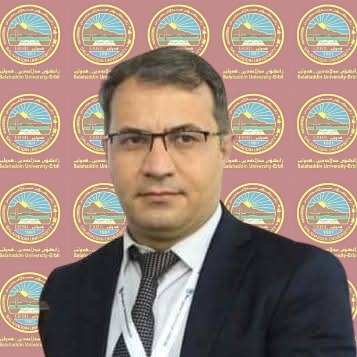
Name: Assist. Prof. Dr. Jihad Shukri Rashid
Title: Head of Persian Department
Contact Information:
Email: [email protected]
Phone: +9647504568833
Welcome to the Persian Department, As the Head of Department, I am honored to lead a dynamic team of educators, researchers, and students committed to excellence in Geosciences disciplines.
•Education:
I got BA of Persian Language and Literature/Persian Department/ Salahaddin University in 1988-2002.
I got MA of Persian Language and Literature /Persian Department/ Urma University in 2001-2009.
I got PhD of Persian Language and Literature /Persian Department/ Tehran University in 2010-2013.
Qualifications:
- Expertise in Persian literature drama, and poetry.
- Expertise in Persian oral and written communication.
Expertise in developing a teaching approach and guiding students.
The Persian Department at the College of Languages, Salahaddin University-Erbil (SUE) focuses on fostering expertise in the Persian language, literature, and culture. While the exact, verbatim mission and vision statements are best obtained from the official SUE website or department handbook (as phrasing can evolve), their core objectives typically align with the following based on common university language department structures and SUE's overall goals:
Typical Mission of the Persian Department:
- Academic Excellence: To provide high-quality undergraduate (and potentially postgraduate) education in Persian language (Farsi), encompassing classical and modern literature, linguistics, translation, and cultural studies.
- Proficiency Development: To equip students with advanced proficiency in all four language skills (reading, writing, listening, speaking) in Modern Standard Persian (Farsi).
- Cultural & Literary Understanding: To foster a deep understanding and critical appreciation of Persian/Iranian history, civilization, diverse cultures, and rich literary heritage (from classical poets like Rumi, Hafez, and Ferdowsi to modern writers).
- Research & Scholarship: To promote scholarly research in Persian linguistics, literature, translation studies, and related fields among faculty and students.
- Professional Preparation: To prepare graduates for diverse careers requiring Persian language skills, such as translation, interpretation, teaching, diplomacy, international relations, media, tourism, and academia.
- Cultural Bridge: To act as a bridge for cultural understanding and academic exchange between the Kurdistan Region/Iraq and the wider Persian-speaking world (Iran, Afghanistan, Tajikistan).
- Regional Leadership: To be recognized as a leading center for Persian language, literature, and cultural studies in the Kurdistan Region and Iraq.
- Academic Hub: To attract talented students and scholars, fostering a vibrant intellectual community dedicated to Persian studies.
- Graduate Success: To produce highly competent, critically thinking, and culturally sensitive graduates who excel in their chosen professions and contribute positively to society.
- Research Impact: To enhance the department's research profile and contribute significantly to the international field of Persian studies.
The Persian Department at the College of Languages of Salahaddin University-Erbil aims to develop comprehensive Persian language competence and cultural understanding among its graduates. Upon completing their degree, students are expected to recognize and produce key grammatical structures of modern Persian and use them accurately in communication; speak and write about everyday topics related to personal life, society, travel, and recreation; and read and comprehend authentic Persian texts such as short stories, reports, scripts, and informational passages from the Persian-speaking world. Graduates should also be able to distinguish between spoken and written registers and use language appropriately in diverse social contexts, and they should be prepared to continue learning Persian at higher levels, whether through further study or independent work with dictionaries and reference materials, reflecting both linguistic competence and cultural literacy in Persian.
The Persian Department in the College of Languages at Salahaddin University-Erbil engages in academic and cultural exchanges that support its mission to deepen students’ understanding of the Persian language and literature and connect with broader scholarly communities. Although specific formal memoranda of understanding for the Persian department itself aren’t widely published online, the department participates in academic research activities and contributes to scholarly work - for example, faculty and students have co-authored research on Persian language learning strategies in peer-reviewed journals, indicating collaborative scholarly engagement beyond the university. More broadly, the College of Languages and Salahaddin University-Erbil support institutional partnerships and academic cooperation with universities and cultural organizations internationally, such as participation in initiatives with foreign universities and joint academic events, which can indirectly benefit departments like Persian through shared workshops, conferences, and cultural programs.
Degree Program Overview
Undergraduate Bachelor’s Program in Persian Language & Literature
The Persian Department offers a four-year (eight-semester) undergraduate program designed to develop students’ skills in Persian language and literature, meeting the credit requirements established by the Ministry of Higher Education.
Key Components of the Program:
-
Language Proficiency
Students cultivate strong command in the four core language skills listening, speaking, reading, and writing focusing on standard modern Persian as spoken in Iran.
Literature and Literary StudiesThe curriculum engages learners with a wide span of Persian poetry and prose, spanning from classical to modern eras. It also includes literary sciences such as rhetoric, prosody, rhyme, literary criticism, methodology, literary history, and comparative literature.
Program Duration and StructureThis is a typical four-year bachelor's program, structured into eight semesters, aligning with academic norms in Iraqi higher education.
Program Objectives and Future VisionThe department envisions advancing into postgraduate studies, aiming to strengthen academic collaboration with other departments and expand research and educational offerings.
Status of Postgraduate Offerings in the Persian Department
According to the official Mission and Vision statement of the Persian Department, there is a forward-looking plan to "offer postgraduate studies", indicating the department’s aspiration to expand into graduate education such as Master’s and PhD programs. However, as of now, there is no publicly available evidence that such postgraduate programs in Persian have been formally launched.
The broader framework for postgraduate study at Salahaddin University is well-established:
-
The university offers MSc and PhD programs, with admission guided by departmental proposals, formal examinations, and overseen by the Postgraduate Office.
Admission involves a competitive exam and a structured approval procedure involving both local and, in some cases, external supervisors especially for PhD candidates.
The Persian Department at the College of Languages, Salahaddin University–Erbil, has outlined specific Program Learning Outcomes (PLOs) aimed at equipping students with comprehensive linguistic and literary competencies. These outcomes are designed to ensure that graduates possess a robust understanding of both the Persian language and its rich literary traditions.
🎓 Program Learning Outcomes
- Language Proficiency: Students will achieve a high level of proficiency in standard modern Persian, encompassing the four core language skills: listening, speaking, reading, and writing. This proficiency is assessed through various academic activities and examinations.
- Literary Analysis: Graduates will develop the ability to critically analyze and interpret significant works of Persian poetry and prose, spanning from classical to contemporary periods. This includes understanding the historical and cultural contexts that have shaped Persian literature.
- Linguistic Competence: The program emphasizes a deep understanding of Persian grammar, syntax, and phonology, enabling students to apply linguistic theories to practical language use.
- Research Skills: Students will be trained in research methodologies, allowing them to conduct scholarly investigations into various aspects of Persian language and literature. This includes the ability to formulate research questions, review literature, and present findings effectively.
- Cultural Awareness: The curriculum fosters an appreciation for the cultural nuances embedded in the Persian language, encouraging students to explore the relationship between language and culture.
- Comparative Analysis: Students will engage in comparative studies, examining Persian literature in relation to other literary traditions, thereby broadening their analytical perspectives.
These outcomes align with the department's mission to specialize students in Persian language and literature over the course of their four-year study program, as outlined in the department's mission and vision statement.
The Persian Department at the College of Languages, Salahaddin University-Erbil offers a comprehensive undergraduate program structured over four years (eight semesters), focusing on both linguistic proficiency and literary analysis. The course catalog is organized into four stages, each comprising a combination of theoretical and practical courses.
📘 Course Catalog Overview
- First Stage (Year 1)
- Academic Skills: Focuses on developing essential academic competencies.
- English for University Students: Enhances English language skills tailored for academic purposes.
- Computer Skills / AI: Introduces basic computer literacy and applications.
- Folk Literature: Explores traditional and cultural narratives.
- Literary Texts: Analyzes various literary works.
- Dialects: Studies regional language variations.
- Phonology: Covers the study of sounds in language.
- Second Stage (Year 2)
- Morphology: Examines the structure and formation of words.
- Dialects: Continues the study of regional language variations.
- Prosody: Focuses on the rhythm and pattern of sounds in speech.
- Lexicology: Studies the history and meaning of words.
- Kurdish Civilization: Explores the cultural and historical aspects of Kurdish society.
- The History of Old Kurdish Literature: Analyzes ancient Kurdish literary works.
- Arabic Language: Introduces the fundamentals of the Arabic language.
- Third Stage (Year 3)
- Literary Theories: Investigates various approaches to literary analysis.
- Research Methods: Teaches methodologies for conducting academic research.
- Theories of Criticism: Examines critical perspectives in literature.
- Language Theories: Studies the principles and structures of language.
- Syntax: Focuses on sentence structure and grammar.
- Literary Trends: Explores evolving movements in literature.
- Rhetoric: Analyzes the art of effective communication.
- Persian Language 1: Develops foundational skills in Persian.
- Story and Novel: Studies narrative forms and structures.
- Fourth Stage (Year 4)
- Comparative Grammar: Compares grammatical structures across languages.
- Linguistics: Provides an overview of linguistic principles.
- Practical Criticism: Applies critical analysis to literary works.
- Contemporary & Modern Literature: Explores recent developments in literature.
- Semantics: Studies meaning in language.
- Comparative Literature: Compares literary works from different cultures.
- Persian Language 2: Enhances advanced skills in Persian.
- Research Project: Involves conducting an independent research study.
- Elective: Allows students to choose a course of interest.
🎓 Admission Overview
- Eligibility Requirements
- Completion of high school (Grade 12) or an equivalent secondary education program, validated through recognized credentials.
- Performance on the Kurdistan National Exam (or equivalent), which serves as the primary academic criterion for selection. Applicants are admitted competitively based on exam scores.
- No separate departmental entrance exam is typically required for language departments, unlike specialized colleges such as Fine Arts or Physical Education.
- Application Process
- Prospective students apply through the Central Admission Office of the KRG, often via an online portal or through official forms on the University’s website.
- Required documentation includes: high school transcript, national ID or birth certificate, passport-sized photos, and any applicable application fees.
- Selection and Enrollment
- Admissions are quota-based and determined by academic merit, particularly National Exam performance.
- Once selected, students receive an official admission letter and proceed to complete university registration.
- Program Duration and Structure
- The Bachelor’s degree is typically a four-year full-time program, aligned with the credit system of 154–164 academic units.
- The academic calendar runs approximately from mid-September to early July, with two semesters per year.
Graduates of the Persian Department are well-positioned for diverse career paths owing to their comprehensive training in language proficiency, literature, and translation. The department’s mission emphasizes preparing graduates to work effectively as interpreters and translators, including in media settings such as radio and television, and within government entities. This is reinforced by the support of the university’s Career Development Center (CDC) , which offers tailored services to alumni ranging from internships, career workshops, and job fairs to networking events and mentorship opportunities helping to bridge the gap between academic study and professional success. By combining strong linguistic and cultural competence with active career guidance, Persian Department graduates are increasingly finding roles in education, translation, media, and public service.
Graduates of the Persian Department are well-positioned for diverse career paths owing to their comprehensive training in language proficiency, literature, and translation. The department’s mission emphasizes preparing graduates to work effectively as interpreters and translators, including in media settings such as radio and television, and within government entities. This is reinforced by the support of the university’s Career Development Center (CDC) , which offers tailored services to alumni ranging from internships, career workshops, and job fairs to networking events and mentorship opportunities helping to bridge the gap between academic study and professional success. By combining strong linguistic and cultural competence with active career guidance, Persian Department graduates are increasingly finding roles in education, translation, media, and public service.
There is no any publications of department yet.
Documented Research Projects
- “All department Analysis According to the Cooperative Principle”: This study, listed via Academia.edu, explores both traditional and modern department jokes through the lens of the Cooperative Principle in pragmatics. It compares how these jokes function across different eras, examining their pragmatic layers and social meanings.
Broader Research Support and Engagement
While there isn't an extensive catalog of department-specific project listings, there are important institutional supports and opportunities that may encompass departments-related research:
- Cultural and Academic Center: This university-wide center supports cultural, literary, and interdisciplinary research. Its mission includes fostering rigorous scholarly work in college studies, producing publications, organizing public lectures and international seminars, and encouraging research dissemination to policymakers and the broader public.
- Salahaddin University Research Center (SURC): Although not department-specific, SURC offers infrastructure and strategic backing for impactful research across social sciences. It emphasizes creating collaborative research teams, securing grants, training researchers, and enhancing the visibility of research findings - potentially including work by scholars in all department.
What’s Available - and What Isn’t Clearly Documented:
No department-specific research groups listed: The department’s official profile does not mention any organized research teams or lab groups dedicated to linguistics, literature, or applied studies. Its profile emphasizes teaching, curriculum, and learning outcomes rather than research collectives.
University-wide Research Center (SURC): Salahaddin University’s central Research Center (SURC) is structured to support cross-disciplinary and collaborative research - especially in the social sciences, where language studies could naturally fit. It offers grants, capacity-building, and project support, but it appears to be university-wide rather than department-specific
Students at the College of Languages, Salahaddin University-Erbil, benefit from a richly multifaceted educational environment that emphasizes international collaboration, academic enrichment, and practical development. The College has forged strong academic ties with institutions such as the University of Leipzig (Germany), various French, Iranian, Turkish universities, Ain Al‑Shams in Egypt, and Al‑Hashmi in Jordan, enabling students to engage in cross-border projects, workshops, and cultural exchanges. Through the University’s International Relations Office, students gain access to Erasmus+ and Split‑Site PhD mobility programs, research partnerships, and even modest financial support from DAAD for displaced undergraduates, as well as opportunities to participate in international summer schools. Additionally, the Language Center the first public language center in the Kurdistan Region offers accessible English courses across multiple levels, serving government employees, graduates, lecturers, and private sector participants; to date around 4,500 individuals have earned certificates through its six-week programs. On the cultural and extracurricular front, departments such as Translation host vibrant events, including exhibitions, academic panels, student competitions, and volunteer initiatives like campus clean-ups offering students leadership experience, creative expression, and community engagement.
In the College of Languages, academic guidance is typically provided by departmental college staff or the Head of Department. In the case of the Persian Department, the Head of Department is expected to serve as the primary point of contact for advising students on matters such as course selection, academic progression, thesis planning, and other academic or student-related concerns.
Students of the Persian Department benefit from the robust support services of the Career Development Center (CDC) at Salahaddin University-Erbil, which actively connects students with internship opportunities that align with their academic and professional aspirations. The CDC, established in collaboration with IREX and supported by the U.S. Embassy and the Ministry of Higher Education, facilitates practical work experiences by maintaining updated listings of internships and jobs, organizing training sessions, career workshops, and networking events, and liaising with employers across governmental, media, educational, and cultural institutions. Through these initiatives, Persian majors can apply their language expertise in real-world settings such as translation departments, media outlets, cultural organizations, and government offices enhancing their professional readiness and broadening their career prospects.
Students of the Persian Department at the College of Languages benefit from comprehensive support provided by the university’s Career Development Center (CDC), a resource-rich hub established in collaboration with IREX and the U.S. Embassy. The CDC is dedicated to guiding students and alumni toward professional success by offering a wide array of services: career consultations; workshops and seminars focused on skill-building; resume and cover letter support; curated listings of internship and job opportunities; networking events; job fairs; and personalized guidance to assist students in identifying their interests, strengths, and career paths. By leveraging these services, Persian Department students can enhance their readiness for the workforce, explore diverse fields such as translation, media, education, and cultural institutions, and cultivate meaningful connections with employers, alumni, and industry stakeholders.